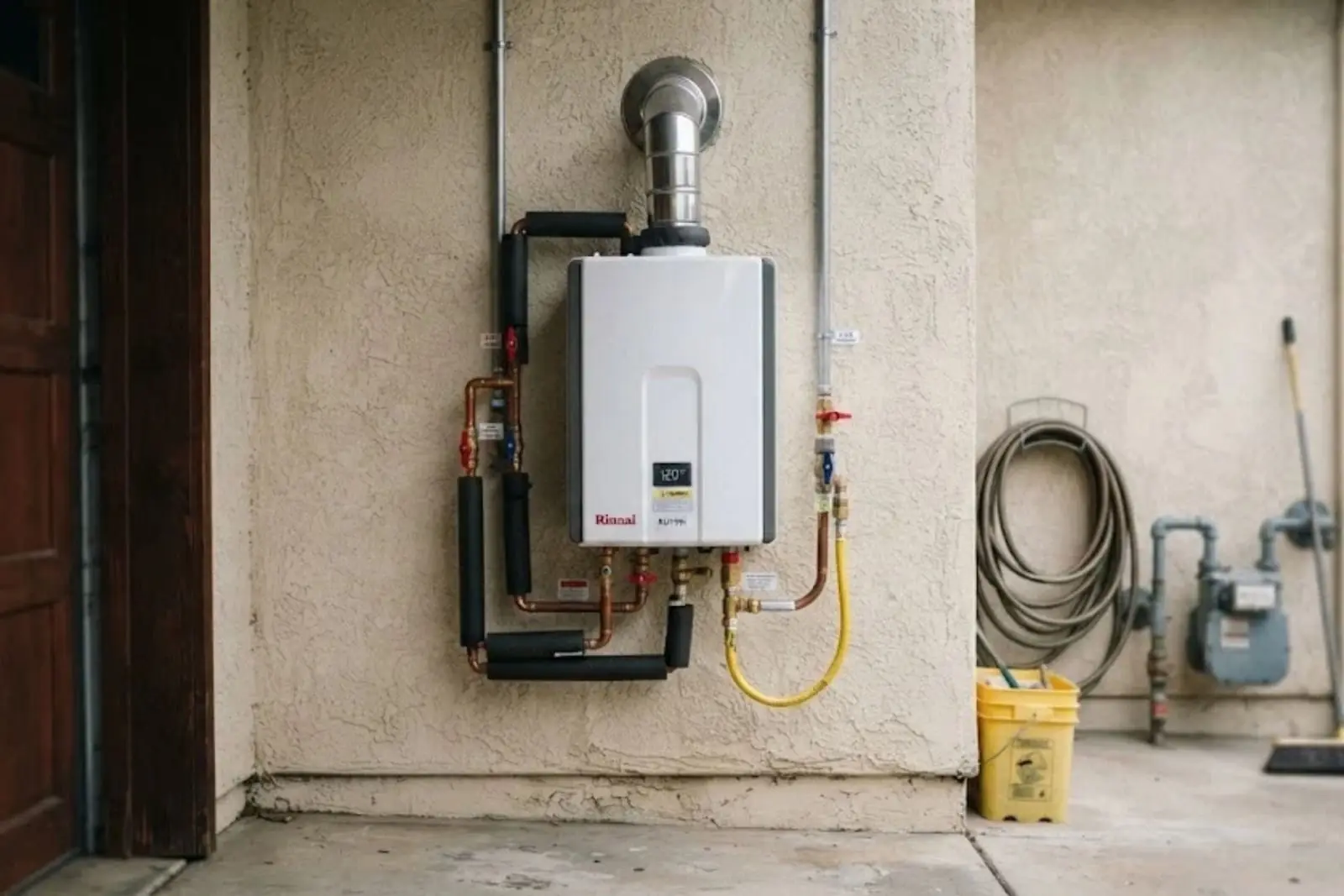
What a 110 Volt Tankless Heater Is
A 110 or 120 volt tankless heater plugs into a standard household outlet and heats water as it flows. These small units are made for one sink or a very small fixture. They draw modest power, so they heat modest flow.
Heating water takes a lot of energy. A shower needs far more power than a standard outlet can deliver, which is why whole-house electric tankless units use large dedicated circuits instead of a plug.
What a Plug-In Unit Can Do
- Supply warm water to a bathroom sink or a utility sink
- Serve a small bar sink or a hand-wash station
- Provide warm water at a remote location that has no hot line
- Work as a supplement at a point where the main heater is far away
Do not expect a plug-in unit to run a shower. It can raise water temperature a few degrees at best at shower-level flow. Expecting more is the main source of disappointment with these heaters.
Why Whole-House Electric Units Need Big Circuits
Whole-house electric tankless heaters can draw tens of amps at 240 volts, often on several dedicated breakers. An older panel may not have the capacity, and a service upgrade can be part of the project. The electrician and the plumber need to work together.
Gas tankless units deliver more heat for whole-house use but need a gas line of the right size, proper venting and a condensate drain on high-efficiency models. See water heater installation for the steps.
Tankless options: want it looked at?
Call (855) 575-2890 to talk through the problem and ask about timing.
Comparing Your Options
| Type | Power or fuel | Good for |
|---|---|---|
| 110 volt point-of-use | Standard outlet | One sink or small fixture |
| 240 volt point-of-use | Dedicated circuit | A bathroom group or small area |
| Whole-house electric | Large dedicated circuits | Homes with panel capacity and no gas |
| Whole-house gas | Gas line and venting | Homes with gas service and high demand |
Sizing Matters More Than Voltage
Whatever the type, size the heater to the flow and the temperature rise you need. Incoming water temperature changes with the season, so a heater that is fine in August may struggle in January. In Florida the swing is smaller than in cold states, but it still matters for the coldest nights.
Add up the fixtures you want to run at once. A busy rental with two showers and a dishwasher needs more than a small condo. Choosing too small is the most common mistake we see.
Maintenance and Scale
Small units still scale up, and descaling schedules depend on your water. If your fixtures show spots and scale, a softener or filter may protect the heater. Check the manufacturer instructions before using any descaling product.
Questions to Ask Before You Buy Any Electric Unit
- What flow rate does it deliver at a temperature rise of about 40 degrees?
- How many amps does it draw, and what breaker does it need?
- Does the manufacturer allow it for the use you have in mind?
- What is the warranty, and what voids it?
- Who handles installation, and does it need a permit?
Specifications are written for the best case. Check them against your coldest incoming water and your highest flow, not the average day.
Alternatives for a Far-Away Bathroom
A long wait for hot water at a distant bathroom is a common complaint in larger beach homes. A point-of-use heater helps, but so do a recirculation pump, a better pipe layout or insulation on the hot line. Each has costs and trade-offs, and the best one depends on where the heater sits relative to the fixtures.
A plumber can trace the run, measure the wait and recommend a fix. Sometimes the answer is a small heater at one sink and sometimes it is relocating the main heater closer to the bathrooms.
Safety Points for Any Electric Water Heating
Electric heating elements and water must be separated by protection. A heater needs a ground fault protected circuit when the code requires one, and it needs a working relief arrangement for pressure. Plug-in units should be connected to an outlet that is not shared with other heavy loads, and extension cords are never a good idea.
Check the manufacturer instructions for placement. Many units cannot be installed in direct spray or in a closed cabinet without ventilation. A small unit that runs hot in a closed cabinet is a hazard.
When in doubt, ask a licensed plumber or electrician to check the setup before you plug it in.
Panama City Beach Note
Many condos and cottages near the Gulf have small closets and long hot water runs. A point-of-use heater can help a remote bathroom, but it will not solve a whole-unit hot water problem. If your hot water takes a long time to arrive at a far bathroom in a beach house, a recirculation option or a better-sited heater may serve you better. Our Laguna Beach and Panama City teams can look at the layout.
110 Volt Tankless Questions in Panama City Beach
Not at normal shower flow. It is designed for sinks and small fixtures.
They are simple, but water connections, electrical protection and local rules still apply. A plumber or electrician can confirm the setup.
Rules vary. Check with your association before buying equipment.
For a bathroom or a small area, often yes. It needs a dedicated circuit.