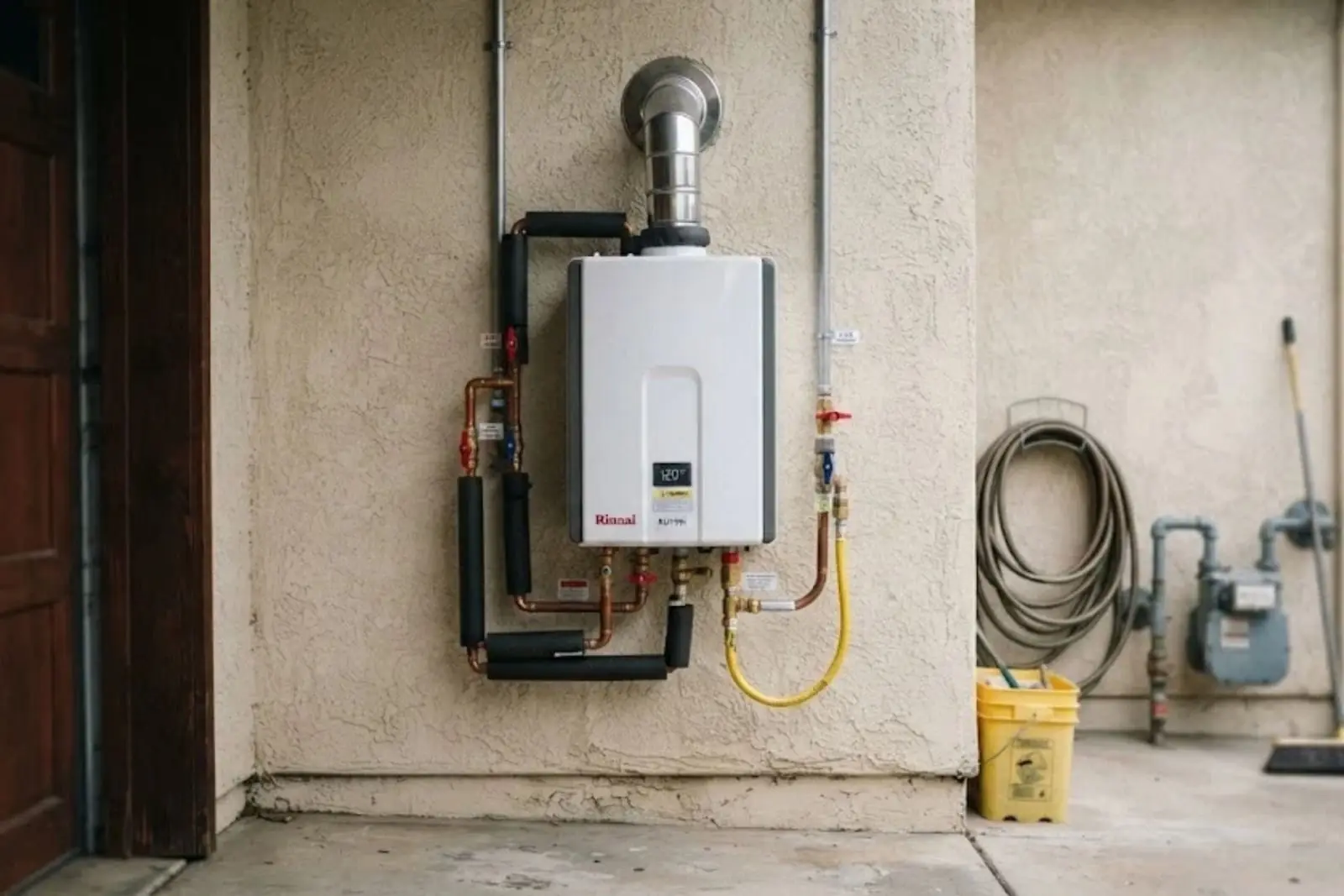
How a Tankless Heater Works
When you open a hot tap, flow sensors tell the unit to fire. A gas burner or electric elements heat water as it passes through a heat exchanger. There is no stored water, so the supply is continuous as long as the unit can keep up with the flow you are asking for.
That limit matters. A single unit has a maximum flow rate and a temperature rise. Run two showers and a dishwasher in a large rental and a small unit may not keep up. Sizing is the main decision.
Is Tankless Right for Your Home?
- You want continuous hot water for a large household or a rental
- You have limited space and want the tank footprint back
- You can accept a higher upfront cost and different maintenance
- Your home can support the gas line, venting or electrical load
A tankless heater suits some homes and not others. A small condo with a tight closet may gain space, while a house with a small gas line may need an upgrade before a unit can run. For tank options, see water heater replacement.
Gas, Electric and the 110 Volt Question
Gas units move more water and suit whole-house use. Electric units need large dedicated circuits in most cases, and a whole-house electric tankless can overload an older panel. Small point-of-use electric units run on standard household voltage and serve a single sink.
Because the electric load is the main trouble, we check the panel before recommending an electric whole-house unit. Venting is the main question for gas, and it must follow the manufacturer instructions and code.
Thinking about tankless?
Call (855) 575-2890 to talk through the problem and ask about timing.
Scale, Descaling and Maintenance
Mineral scale builds on the heat exchanger over time and reduces flow, triggers error codes and shortens unit life. Descaling means circulating a mild acid solution through the exchanger, and it is a routine maintenance task for any tankless unit. How often depends on your water.
If you do not know what is in your water, a simple test of your tap tells you. We can discuss a softener or filter when scale is a recurring problem.
Repairs We Handle
- Error codes for ignition, flame, flow and temperature faults
- Cold water sandwich complaints and temperature swings
- Venting problems and condensate drain blockages
- Flow sensor and inlet filter cleaning
- Isolation valve installation for easy descaling
Many error codes clear after a descale and a filter cleaning. If the unit is failing for good, our water heater repair team explains whether repair or replacement makes sense.
Planning Maintenance Before a Problem Appears
Tankless units are low-maintenance but not no-maintenance. Clean the inlet screen, descale on the schedule your manufacturer sets for your water and keep the vent and condensate drain clear. A yearly check by a plumber catches burner and sensor issues before they become error codes at the worst moment.
Record the model number and the install date. If the unit ever needs a part, that information speeds up the visit and avoids guesswork.
What to Do When a Tankless Heater Stops Working
Note the error code on the display and turn the unit off at its switch. If you smell gas, leave the house and call the gas utility from outside. Do not try to relight or bypass safety controls. Check that the gas valve and water valves are open and that nothing blocks the vent, then call with the model and the code.
What Affects the Price
Tankless Water Heater Questions in Panama City Beach
It can lower standby losses, but the upfront cost is higher, and savings depend on how you use hot water. We do not promise a specific payback.
It depends on your water. Many manufacturers recommend yearly service, and we recommend a check any time flow drops or an error code appears.
Small point-of-use units can. Whole-house electric units need much more power and are not a plug-in item.
Often, though gas rules and venting paths in multi-family buildings can limit the choice. We check with the association before quoting.
We work on common brands. Tell us the model and any error code when you call so we can prepare.