Think You Have a Slab Leak? Act Now
Call (855) 575-2890 to talk through the problem and ask about timing. Shut off the main water valve if water is visible on the floor or the meter is spinning fast. A slab leak can run for days with no water on top, but the loss and the undermining of soil beneath the slab add up.
Stay off wet flooring, keep outlets and electrical devices out of the wet area and use the main shutoff only until the leak is found. Taking photos and noting the meter reading helps with an insurance claim.
Signs of a Leak Under the Slab
- A warm or hot patch on the floor that does not match the sun
- The sound of running water when every fixture is off
- A water meter that moves with the house shut down
- Cracked tile, lifted flooring or damp carpet at one spot
- Low hot water pressure with no appliance problem
- A sudden rise in the water bill
One sign is a clue. Several together are a strong reason to schedule detection quickly, since a slow leak under concrete slowly erodes the soil that supports the slab.
Why Slab Leaks Happen Around the Bay
Most Florida homes sit on a concrete slab, and supply pipes often run through or beneath it. Copper lines can corrode from the outside in aggressive soil, and a pinhole forms. Pipes can also rub against rock or concrete as the slab shifts, and that wear opens a leak over time.
Sandy coastal soil and a high water table after heavy rain keep the ground moving. Homes in older parts of Panama City often have copper from the 1970s and 1980s, which is the age range where pinhole leaks become common. Newer homes with PEX can leak at fittings.
How We Locate the Leak
The process starts with isolating the system. We test the hot and cold sides separately and shut off branches until the pressure holds. That tells us which line is leaking before we choose a tool.
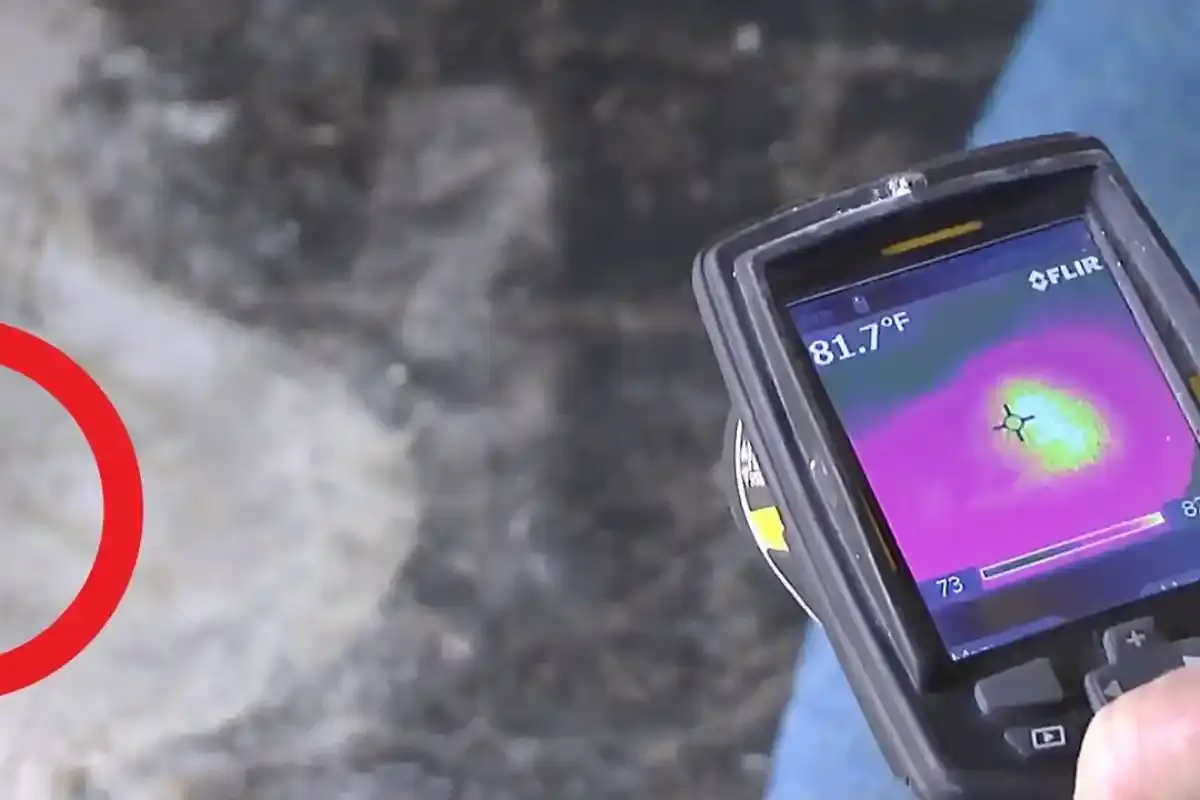
Then we use acoustic listening to hear the leak through the concrete, thermal imaging to read warm lines on a hot-water leak and, where appropriate, tracer gas. Combined, they usually narrow the leak to a small spot on the floor. More on those tools is on our leak detection page.
Warm spot on the floor?
Call (855) 575-2890 to talk through the problem and ask about timing.
Repair Options and Honest Trade-Offs
| Option | How it works | Trade-off |
|---|---|---|
| Spot repair through the slab | Cut and open the concrete at the leak and replace the section | Floor covering and concrete are disturbed at that spot |
| Reroute overhead | Abandon the leaking line and run new pipe through walls and ceilings | More work in the house, no concrete cutting |
| Epoxy pipe lining | Coat the inside of the pipe to seal the leak | Suits some conditions and not all, needs the right pipe layout |
| Partial repipe | Replace the failing run or the full system | Higher cost, fewer repeat repairs, see repiping |
There is no single correct answer. A single pinhole in an otherwise healthy system favors a spot repair. Several leaks over time point toward rerouting or repiping. We lay out each path with what is disturbed and what it costs.
Floors, Insurance and Permits
Flooring decides how disruptive a spot repair feels. Tile can be lifted and relaid, hardwood and luxury vinyl are harder. We protect the surrounding area and tell you in advance what will be removed. Slab work may require a permit, and we ask the local building department what applies.
Insurance policies treat slab leaks differently. Some cover the resulting water damage and some also cover access costs. Keep photos, the leak report and invoices together for your adjuster.
What Affects the Price
Slab Leak Repair Questions in Panama City Beach
Yes. Call (855) 575-2890 to talk through the problem and ask about timing.
Warm floor spots, running water sounds with everything off, a moving water meter and damp flooring at one spot are the common signs. Detection confirms it.
Sometimes. Rerouting pipes overhead or lining a pipe can avoid cutting the slab, but the right choice depends on the layout and the pipe condition.
Prolonged leaks can erode soil under the slab and cause settling. That is a reason not to wait once the signs appear.
It varies by policy. Ask your insurer about coverage for the leak, the access work and the water damage.
If the leak is the first in a healthy system, spot repair is often enough. Repeated leaks usually point to repiping.