Why Plastic Pipe Is Everywhere
Plastic pipe resists corrosion, weighs little and goes together quickly. Those traits made it standard in new construction and renovations across Florida. Each type has a specific purpose, and using the wrong one is a common cause of leaks and failed inspections.
The key is to match the pipe to the job. Supply lines carry pressurized water, drain lines carry waste by gravity and vent lines carry air. The fittings that join them are designed for those conditions and are not interchangeable.
The Main Plastic Pipe Types
| Type | Typical use | Notes |
|---|---|---|
| PVC | Drain, waste and vent lines, irrigation | Not for hot water supply |
| CPVC | Hot and cold water supply | Rigid, can become brittle with age |
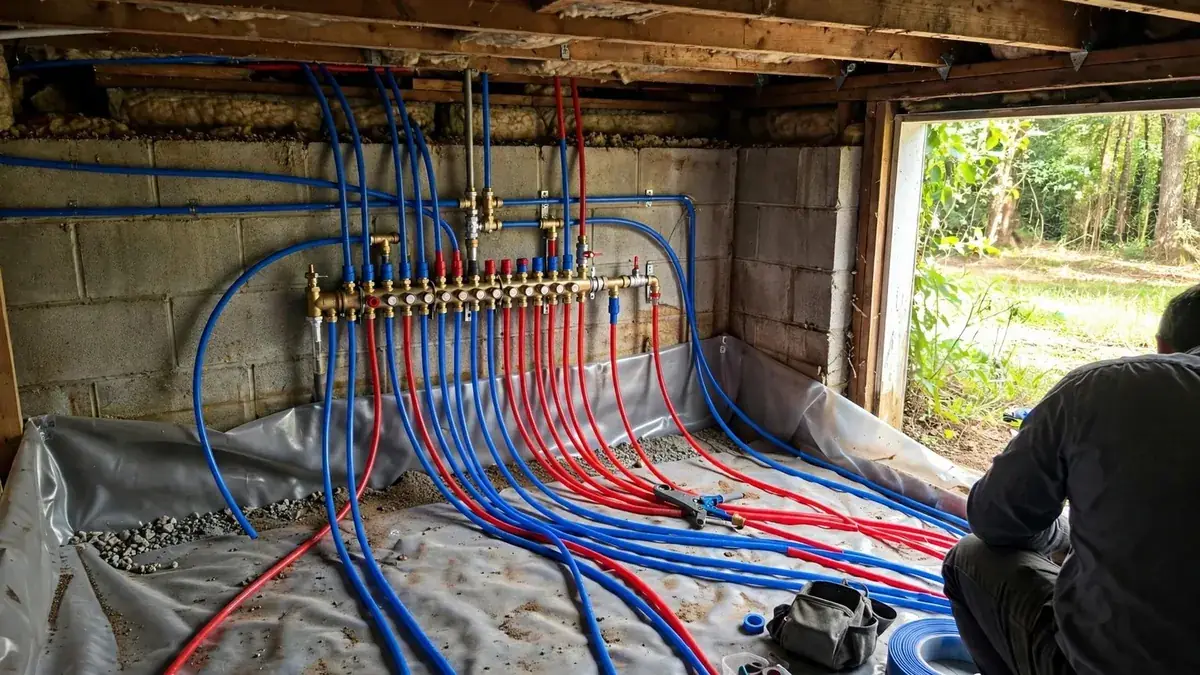
| PEX | Hot and cold water supply | Flexible, protect from sunlight |
| ABS | Drain, waste and vent lines | Black plastic, some jurisdictions restrict its use |
Local code decides what can be used where. Permit rules vary, so check with the building department before you buy materials for a project.
Fitting Types and What They Do
- Couplings join two lengths of pipe in a straight line
- Elbows change direction, in 45 or 90 degree angles
- Tees split a line into a branch
- Adapters join one pipe type to another or to a threaded fitting
- Caps and plugs close the end of a line
- Unions allow a pipe to be disconnected for service
A fitting is only as good as its joint. PVC and CPVC use primer and solvent cement, which chemically welds the joint. PEX uses crimp rings, clamp rings or push-fit connectors. Each method has its own tools and its own failure modes.
Plastic pipe fittings: want it looked at?
Call (855) 575-2890 to talk through the problem and ask about timing.
Common Fitting Mistakes
Mixing materials without the right adapter is the most frequent mistake. PVC cement will not bond to PEX or copper, and a threaded plastic fitting can crack if it is over-tightened. Cheap push-fit fittings sometimes get used in places where they cannot be inspected, and that is a risk if they leak behind a wall.
Another mistake is skipping primer or cure time on solvent joints. A joint that looks fine can fail under pressure days later. We leave solvent joints to cure and pressure test the system before anything is closed up.
Sun, Heat and Other Enemies of Plastic
Ultraviolet light weakens many plastics, and PEX left exposed outdoors can degrade quickly. Hot attics push CPVC toward brittleness. Chemicals, such as some solvents and cleaners, attack certain plastics. Knowing where a line runs helps decide what to use.
In practical terms, outdoor lines should be shielded or use a UV-resistant material, and attic runs need support and room to expand. Our repiping page covers how we choose between PEX and copper for whole-house work.
When Plastic Fittings Fail
- Visible cracking at a threaded adapter
- A drip at a push-fit connector
- A stained spot on drywall near a supply line
- Hissing or the sound of running water behind a wall
- A pressure drop that gets worse over time
If you suspect a hidden failure, our leak detection service can locate it before the wall is opened. A single failed fitting is a small repair. A wall full of water is not.
Choosing Fittings for a Repair
The safest approach is to identify the pipe first. Look for printing on the pipe, such as the material and size, and match the fitting to it. If you cannot identify it, bring a sample to a supply house or call a plumber. A transition fitting is available for almost every combination of materials.
Whenever you open a line, think about what is next to the repair. If neighboring fittings look weathered or cracked, replacing them while the line is open often costs less than a second visit.
Reading Pipe Markings Before You Buy
Every length of plastic pipe is printed with its material, size, pressure or schedule rating and a standard it meets. PEX shows its temperature and pressure ratings and a color for hot or cold. PVC shows schedule 40 or 80. A quick read tells you what you have and whether a replacement part is compatible.
If markings have worn off, compare the pipe to a sample at a supply store, or ask a plumber to identify it. Guessing is how a PVC fitting ends up on a CPVC line and fails months later.
Solvent Cement, Crimp Rings and Push-Fit Compared
Solvent welding makes a permanent joint and works on PVC, CPVC and ABS when the right primer and cement are used. Crimp or clamp rings secure PEX and need a calibrated tool. Push-fit fittings are quick and reusable but cost more, and some inspectors dislike them in concealed spaces.
No method is wrong. The method should match the pipe, the location and your tolerance for future access. If a connection will be hidden in a wall, a permanent joint is usually a safer choice than one you may need to inspect.
Fittings for Drain, Waste and Vent Work
Drain lines use fittings that guide waste downhill. A sanitary tee turns a vertical line into a horizontal one with a smooth sweep. A wye and a long-sweep elbow reduce the chance of snags. Using a plain tee or a tight elbow where a sweep is needed creates a spot where solids catch, which is a hidden cause of clogs.
Vent fittings keep air moving so traps do not siphon dry. A missing or undersized vent causes gurgling and slow drains. The fittings and the layout must follow the plumbing code, and permit rules vary.
If your house has recurring slow drains, a poorly laid out fitting is one possibility a camera can reveal.
Panama City Beach Note
Sun and salt air are the local factors. Outdoor spigots, pool equipment lines and irrigation fittings along the Gulf sit in strong sunlight and humid, salty air, which ages plastic and corrodes metal adapters. Many beach homes also have attic plumbing runs that get very hot in summer. If you manage a rental near Laguna Beach or in Panama City, inspect exposed plastic fittings each spring.
Plastic Pipe Fitting Questions in Panama City Beach
No. PVC is not rated for hot water supply. CPVC or PEX serve that purpose.
It depends on the line, but UV exposure is the concern. Shield exposed plastic or use fittings rated for outdoor use.
Code and manufacturer rules decide. Many plumbers avoid concealing them where they cannot be inspected.
Often for larger work. Rules vary, so check with the local building department.