Start With the Water Meter
The meter is the most reliable first test. Turn off every faucet and appliance in the house, including the ice maker and any irrigation controller. Then look at the meter. Most have a small leak indicator, often a triangle or a dial that spins slowly. If it moves, water is leaving the system.
To tell whether the leak is before or after your house shutoff, close the main valve at the house and check the meter again. If it still moves, the leak is between the meter and the shutoff, which is the service line. If it stops, the leak is inside the house. See our water line repair page for the first case.
Listen and Feel
- Stand quietly in each room with everything off and listen for hissing or running water
- Walk barefoot across tile and hard floors and feel for a warm spot
- Check along baseboards and at the base of walls for dampness
- Look for cracks in grout, lifted floor edges or a musty smell
- Check the water heater closet, since hot line leaks heat the slab above
A warm spot suggests a hot water line leaking beneath the floor. Cold line leaks are harder to find by feel. Sound is often the best clue for those.
Check for Pressure and Heater Clues
A slab leak on the hot side can cause hot water pressure to fall and the water heater to run more than usual. A heater that seems to cycle constantly, or a hot tap that is slow to deliver heat, can be a hint. These signs are not proof, since other problems cause them too.
Compare your water bill with the same months last year. A rise without a change in habits is a strong clue. Seasonal rental use can hide it, so use the meter test when the house is empty.
Slab leak detection: want it looked at?
Call (855) 575-2890 to talk through the problem and ask about timing.
Tests We Use That You Cannot Do
| Test | What it does | Why it helps |
|---|---|---|
| Pressure isolation | Tests each line section for pressure loss | Shows which line is leaking |
| Acoustic listening | Amplifies leak sounds through the concrete | Narrows the location |
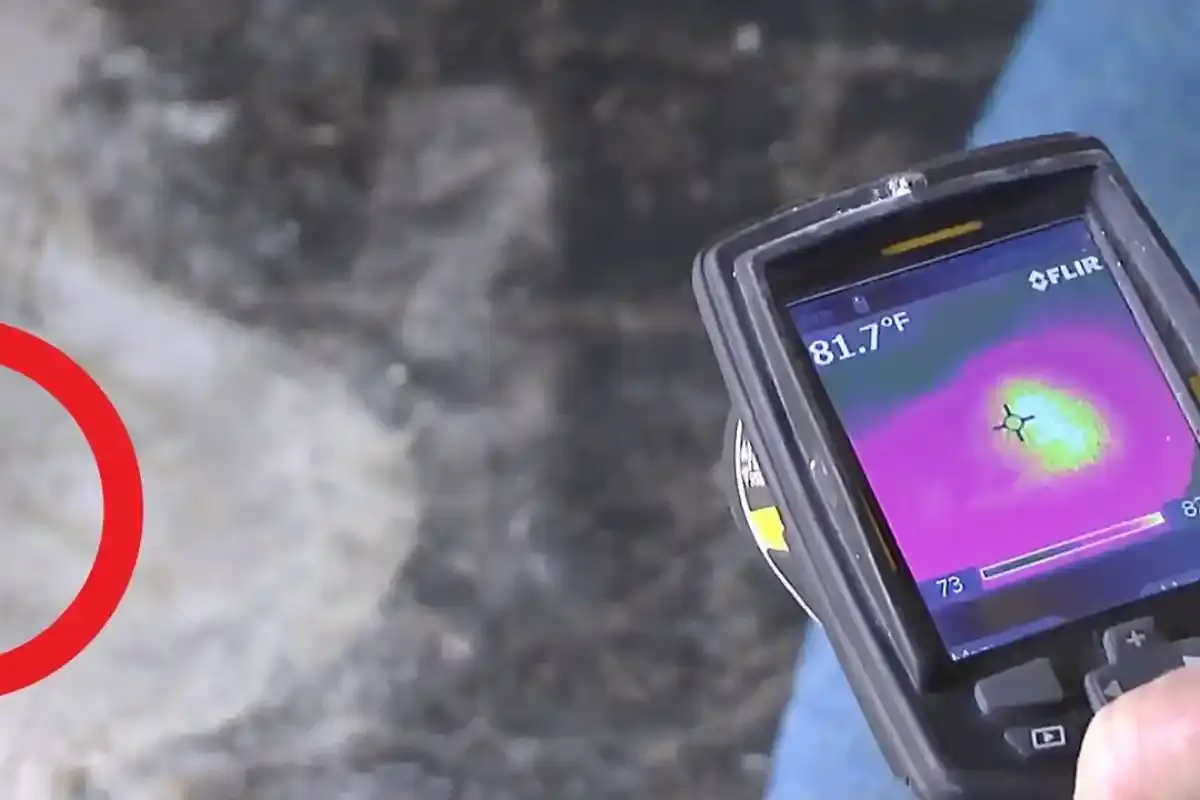
| Thermal imaging | Reads temperature differences | Finds hot line leaks and wet areas |
| Tracer gas | Releases a safe gas that escapes through the leak | Confirms small leaks |
These tools turn a vague suspicion into a specific spot. More on how the equipment is used is on our leak detection page.
What Not to Do
- Do not drill or cut into the floor to look for the leak
- Do not ignore a moving meter because the house looks dry
- Do not rely on a dye or additive to find a slab leak
- Do not run the water to see if the spot grows
Cutting a floor without knowing where to cut can cause damage and may miss the leak. Detection first saves floors.
If You Find Signs
- Shut off the main if water is visible or the meter spins fast
- Take photos and write down the meter reading and time
- Note any warm spots, sounds or damp areas
- Call (855) 575-2890 to talk through the problem and ask about timing.
- Contact your insurer if you see damage
Acting early limits soil erosion beneath the slab and reduces damage to flooring and walls. Once the leak is located, the repair options are covered in our slab leak repair guide.
Leaks That Are Not Slab Leaks
Plenty of floor dampness has nothing to do with the slab. A leaking water heater, a failing toilet seal, a sweating pipe or even a rain leak at a door can wet a floor. Condensation on cold lines in humid air also causes dampness that looks like a leak.
Rule out the obvious first, then use the meter. If the meter is still moving with every fixture off, the cause is real and detection is worth it.
Keeping a Simple Leak Log
If you suspect a leak, record the meter reading at the same time each day for a few days, with the water off. Note the temperature of the floor spots you found and whether sounds change at different times. A short log tells a plumber more than a general description and may save a visit.
Add photos of the meter and any stains. If you manage a rental, share the log with the manager so they can plan around repairs.
Why Early Detection Pays Off
A leak under a slab does more than waste water. It can wash away fine soil, leave voids under the concrete and lead to cracks over time. It also soaks flooring, baseboards and drywall from below, which feeds mold.
The earlier a leak is found, the more choices you have. A small leak found early may be a single spot repair. A leak that ran for months may involve restoration work as well as plumbing.
What Different Sounds Mean
A steady hiss near a wall or a floor often points to a pressurized supply leak. A rhythmic knocking when a tap closes is usually water hammer, not a leak. A trickle that rises and falls may be a toilet refill. Running sounds late at night, when the house is quiet and the neighborhood draws less water, are the most revealing.
Put your ear near the floor, near the water heater and near the main shutoff. A sound that is loudest at one spot gives the technician a direction. A sound that is the same everywhere is likely background noise from appliances or the meter.
Do not rely on a sound alone. Combine it with the meter test and any warm spots you find.
Panama City Beach Note
Humidity along the Gulf makes floor dampness hard to read, and condensation can look like a leak. That is why the meter test matters more here than guessing by feel. Seasonal homes in Laguna Beach and older houses in Panama City often sit quiet for days, and a meter check on arrival catches a leak that ran while the house was empty.
Slab Leak Detection Questions in Panama City Beach
Yes. Condensation and damp air can wet floors and cold pipes. The meter test separates a real leak from humidity.
Condos may have a single building meter or individual meters. Ask your manager where yours is and how to read it.
Not always. A hot line leak is one cause, but a nearby heater or sun through a window can warm a floor.
No. A moving meter or warm spot is reason enough to call.