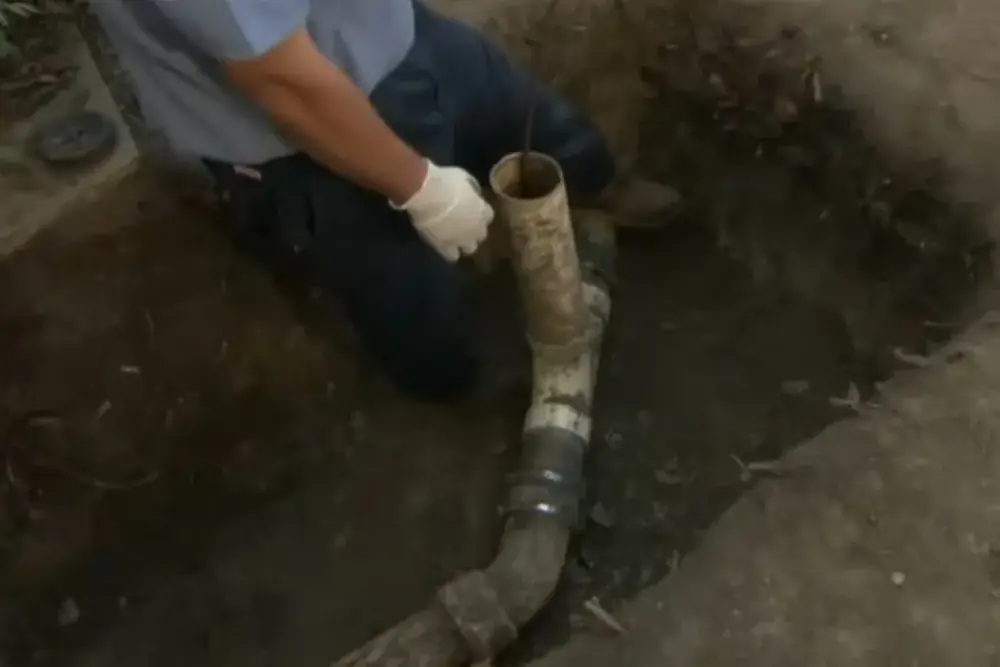
What Pipe Lining Is
Pipe lining, also called cured-in-place pipe, inserts a flexible tube coated with resin into the damaged sewer pipe. The tube is inflated against the pipe wall and the resin hardens, forming a new, smooth pipe inside the old one. Cracks, small holes and root entry points are sealed.
Because the liner goes in through an existing access point, such as a cleanout, there is far less digging than in a replacement. A lawn, driveway or slab can stay in place.
When Lining Is a Good Fit
- The pipe is cracked or has joints that leak and roots are entering
- The line is still in line and holds its shape
- The pipe is under a driveway, patio, slab or landscaping that you want to keep
- The damage is spread along a length, not a single spot
- A camera confirms the pipe is clear enough for the liner to pass
A camera inspection is essential. It shows whether the pipe is suitable. See our sewer inspection page for how that works.
When Lining Will Not Work
A collapsed pipe cannot take a liner, since the liner needs a path. A line with a deep belly that holds water will keep holding water after lining, because the liner follows the pipe shape. A badly offset joint or a broken section may need excavation first.
Heavy scale or roots must be removed before lining. A pipe with lots of branches or sharp bends can be harder to line. In those cases, spot repair or replacement is the honest recommendation.
Sewer pipe lining: want it looked at?
Call (855) 575-2890 to talk through the problem and ask about timing.
Lining Versus Replacement
| Question | Lining | Replacement |
|---|---|---|
| Digging | Little, at access points | Trench or pits along the line |
| Surface restoration | Minimal | Significant on drives, lawns and slabs |
| Fixes a bellied pipe | No | Yes |
| Fixes a collapse | No | Yes |
| Pipe diameter | Reduced slightly | Restored or increased |
Both have a place. Our sewer line repair page lays out the options and how we choose between them.
How a Lining Job Goes
- Camera the line and confirm it is suitable
- Clean the line, often with hydro jetting, to remove roots and scale
- Wet out the liner with resin and pull or invert it into place
- Cure the resin with hot water, steam or light
- Reopen service connections and run a final camera check
Cleaning is a vital step. A liner pressed over debris leaves a rough surface, so hydro jetting often comes first.
Lining, Permits and Warranties
Permit rules for sewer lining vary, and we ask the local building department what applies. Product and workmanship warranties differ by manufacturer and contractor, so ask for the terms in writing and read them before you decide.
No contractor can honestly promise a specific lifespan. A liner is built to last for decades when the host pipe and the installation are sound, and the final camera check is your proof of the work.
Questions to Ask a Lining Contractor
- Will you camera the line before and after, and give me the recordings?
- How will you handle any belly or offset the camera finds?
- What resin and liner system do you use, and what is the warranty?
- How will you reconnect the lateral connections?
- Who handles permits and inspection?
Clear answers are a good sign. A contractor who skips the camera step or will not describe the product is not one to hire.
Why Preparation Decides the Outcome
A liner is only as good as the pipe it lines. Roots must be cut back, scale cleaned off and any debris cleared. Standing water has to be removed or managed, because the resin needs to cure. Cutting corners on cleaning gives a liner with wrinkles or gaps.
After the cure, the line is cut open at each branch so waste can flow in. A final camera pass confirms the liner is smooth, connected and sealed. That recording is your record of the work.
Signs Your Lateral Might Be a Lining Candidate
- Backups that return after cleaning, with roots in the cleanings
- A camera that shows cracks and gaps but a straight, intact pipe
- A line that runs under a patio, driveway or slab you want to keep
- Older clay or cast iron pipe that is rough but not collapsed
- A history of repeated root cutting along the same stretch
These are signs and not proof. A camera is the deciding step. If it shows the line is intact and clear enough for a liner, lining deserves a quote.
Panama City Beach Note
Sandy coastal soil makes digging easy to start and hard to finish, since trenches can collapse and settle. Many Panama City Beach lots have limited room around slabs, drives and landscaping, which makes trenchless repair attractive. Older clay and cast iron laterals in Panama City and Lynn Haven are common candidates, as long as the pipe still holds its shape. A camera pass tells us which route fits your property.
Pipe Lining Questions in Panama City Beach
Lining works from inside the pipe, so soil type matters less than pipe condition. A camera tells us whether the pipe is suitable.
The prep and cure often take a day or so for a typical lateral, depending on length and conditions.
It seals the joints and cracks that roots enter. Roots cannot pass through a sound liner.
No. A collapsed section needs excavation.