Why Method Matters
A leak in an exposed copper line in a crawlspace needs a different search than a leak in a buried supply line. A pinhole that makes a faint hiss and a rupture that sprays water leave different clues. Choosing the wrong method wastes time and can lead to unnecessary cutting.
A good leak search starts broad and narrows. First confirm that a leak exists, then find which line, then pinpoint the location. Each step uses a tool suited to it.
Step One: Confirm and Isolate
The water meter shows whether water is leaving the system. A pressure gauge on a hose bib or a test plug shows whether pressure holds when sections are isolated. By closing valves one at a time, we find which part of the system loses pressure.
These checks cost little and save a lot of time. They also help separate a leak from heavy use. See our water line repair page for leaks between the meter and the house.
Comparing the Main Methods
| Method | How it works | Best for | Limits |
|---|---|---|---|
| Pressure testing | Checks whether a sealed line holds pressure | Confirming and isolating | Does not pinpoint |
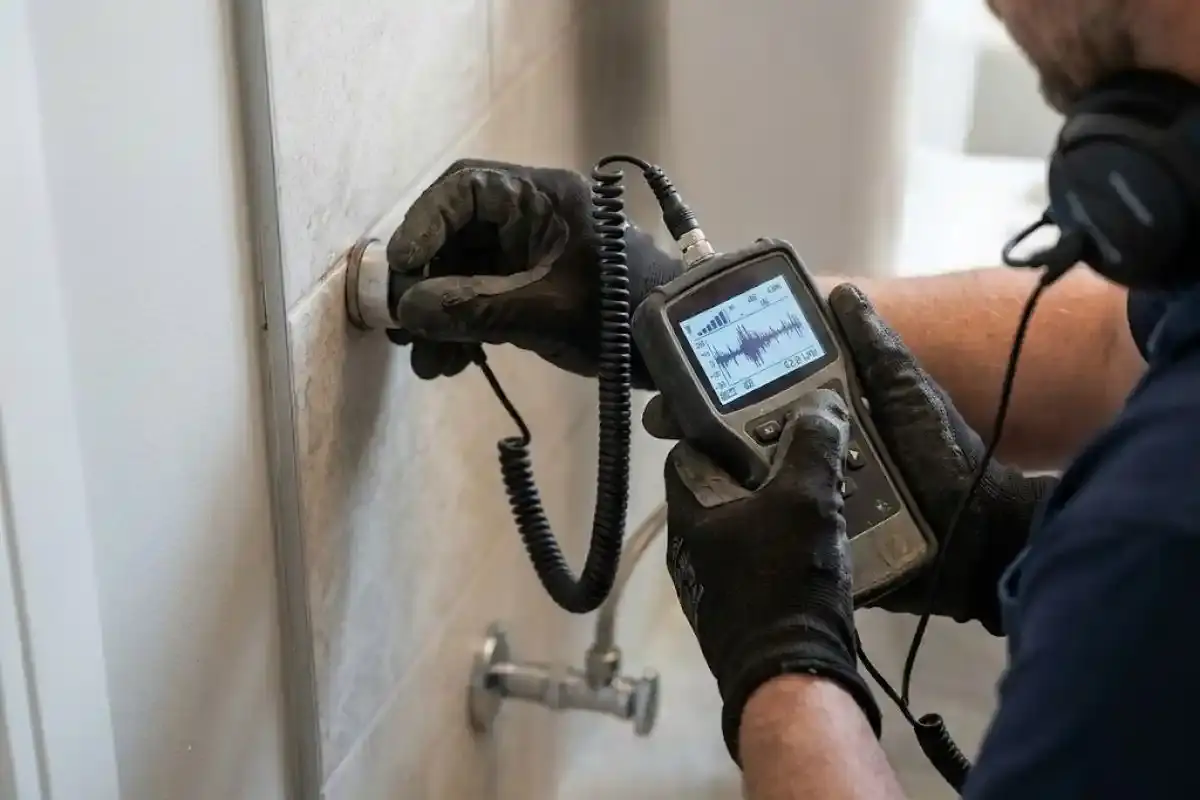
| Acoustic listening | Hears the sound of escaping water | Pressurized lines in slabs and soil | Quiet leaks and noise interfere |
| Thermal imaging | Reads temperature differences | Hot lines and wet walls | Needs contrast |
| Tracer gas | Fills the line with gas and detects escape | Tiny leaks with little sound | Needs access to the line |
| Camera inspection | Sees inside drain pipes | Drain and sewer leaks | Not for pressurized supply lines |
Pipe leak methods: want it looked at?
Call (855) 575-2890 to talk through the problem and ask about timing.
Supply Lines Versus Drain Lines
Supply lines carry pressurized water and leak under pressure, so acoustic and pressure methods work well. Drain lines carry waste by gravity and leak only when water flows, which makes a camera and a flow test the main tools.
A hidden drain leak can rot a subfloor without a high water bill. If you smell sewage or see staining without a bill change, ask about a camera run. Our sewer inspection page explains it.
Special Situations
- Crawlspace lines need visual and moisture checks plus careful access
- Irrigation lines are tested zone by zone with pressure
- Pool supply lines are isolated and pressure tested
- Radiant heating lines are best found with thermal imaging
- Fire sprinkler lines have their own testing rules
Choosing a Detection Service
- Ask what methods will be used and why
- Ask how the location will be confirmed before opening anything
- Ask what you receive in writing
- Ask whether detection and repair are priced separately
- Verify the contractor on the state license lookup
A detection service that claims to find every leak with one gadget is overselling. Good results come from combining methods.
When the Leak Is Not in the Pipe
Not every wet spot is a pipe leak. A failed shower pan, a cracked grout joint, a window or roof leak and a leaking condensate line from the air conditioner all wet walls and floors. A detection visit separates these causes, which saves money on plumbing repairs that would not have fixed anything.
If the meter stays still, the leak is probably not in a pressurized supply line. We then look at drains, fixtures and the building envelope with the same step-by-step approach.
Documenting a Leak Find
A good report names the method, the location, the line affected and the recommended repair. Photos, readings and a simple sketch of the location help the repair crew and the insurer. Ask for the report in writing, and keep it with your home records.
For rental owners, the report also helps in conversations with guests and managers. It shows what happened and what was done, and it supports a decision about repairs.
Typical Leak Locations in a Home
- Under sinks, where supply lines and traps meet cabinets
- Behind toilets, at the supply line and the tank connection
- At the water heater, in fittings and the relief valve line
- Along the main supply line, where it enters the house
- Inside walls, at fittings and past shower valves
- Outdoors, at hose bibs, irrigation valves and pool supply lines
Checking the visible places first costs nothing and often solves the problem. A dry paper towel held against a fitting shows even a slow drip. Hidden leaks come after the visible ones are ruled out.
For stubborn cases, a detection visit pulls the methods together and gives you a documented answer instead of a guess.
What to Do While You Wait for a Leak Visit
Shut off the main if water is visible and switch off power to wet areas only if you can reach the panel safely. Keep people off wet floors, move valuables and take photos. Do not cut into walls or floors yourself, since an electrical line or a pressurized pipe may sit behind the spot.
Panama City Beach Note
Seasonal use hides leaks. A rental near Laguna Beach can sit empty for days, and a slow leak adds up unseen. Older houses in Panama City often have crawlspaces where leaks go unnoticed, and humidity speeds mold. A meter check on every turnover is cheap, and detection is worth booking when the meter moves.
Pipe Leak Detection Questions in Panama City Beach
Start with the meter. If it moves, pressure tests and acoustic listening narrow the leak.
The gases used are non-toxic mixtures made for this purpose. We follow the equipment instructions.
We test the plumbing lines that supply pools. Pool equipment and shells may need a pool specialist.
No. We choose what fits the situation and stop when the leak is confirmed.