Start by Counting the Fixtures
Walk through the house and note which drains are slow. One fixture means a local clog in its trap or branch. Several fixtures on one floor suggest a shared branch. Fixtures on different floors, or low-level drains such as a floor drain or a shower, point to the main line.
This simple count saves money. A local clog can be cleared with a plunger or a hand auger. A main line clog needs a machine, and treating it with a plunger only wastes time.
What Each Symptom Means
| Symptom | Likely cause | Typical fix |
|---|---|---|
| Slow kitchen sink | Grease and food in the trap or branch | Hand auger or cable |
| Slow bathroom sink | Hair and soap scum in the trap | Clean the trap, small auger |
| Slow shower or tub | Hair clog near the drain | Hair snake or cable |
| Gurgling after another fixture drains | Shared branch or main line restriction | Cable machine |
| Smell from a floor drain | Dry trap or sewer gas | Add water, check venting |
Kitchen Drains
Kitchens clog from grease, starch and food scraps. Grease cools and hardens inside the pipe, where it catches other debris. A disposal that is jammed or a branch line that is coated needs cleaning beyond the trap. See garbage disposal repair if the disposal is involved.
Avoid pouring grease down the sink and run hot water after use. Cold water on grease helps it solidify and coat the pipe wall.
Clogged drains: want it looked at?
Call (855) 575-2890 to talk through the problem and ask about timing.
Bathroom Drains
Hair and soap are the usual culprits. They form a mat that catches more hair. A quick pull with a drain tool at the stopper often clears it, and a catch cover prevents the next one. If a bathroom sink and shower both slow, the shared branch is probably affected.
Toilet clogs are different. A single toilet that clogs repeatedly may have a partial blockage past the trap. Two fixtures clogging together points to the main line.
Floor Drains, Laundry and Outdoor Drains
- Floor drains often have dry traps. Pour water down to refill them
- Laundry standpipes overflow when lint and soap build up
- Outdoor drains clog with leaves, sand and debris
- Slow laundry drainage while sinks run fine suggests a laundry branch problem
Garage and utility drains in coastal homes can fill with sand. A camera pass shows whether the line is partly packed.
When to Call and What to Expect
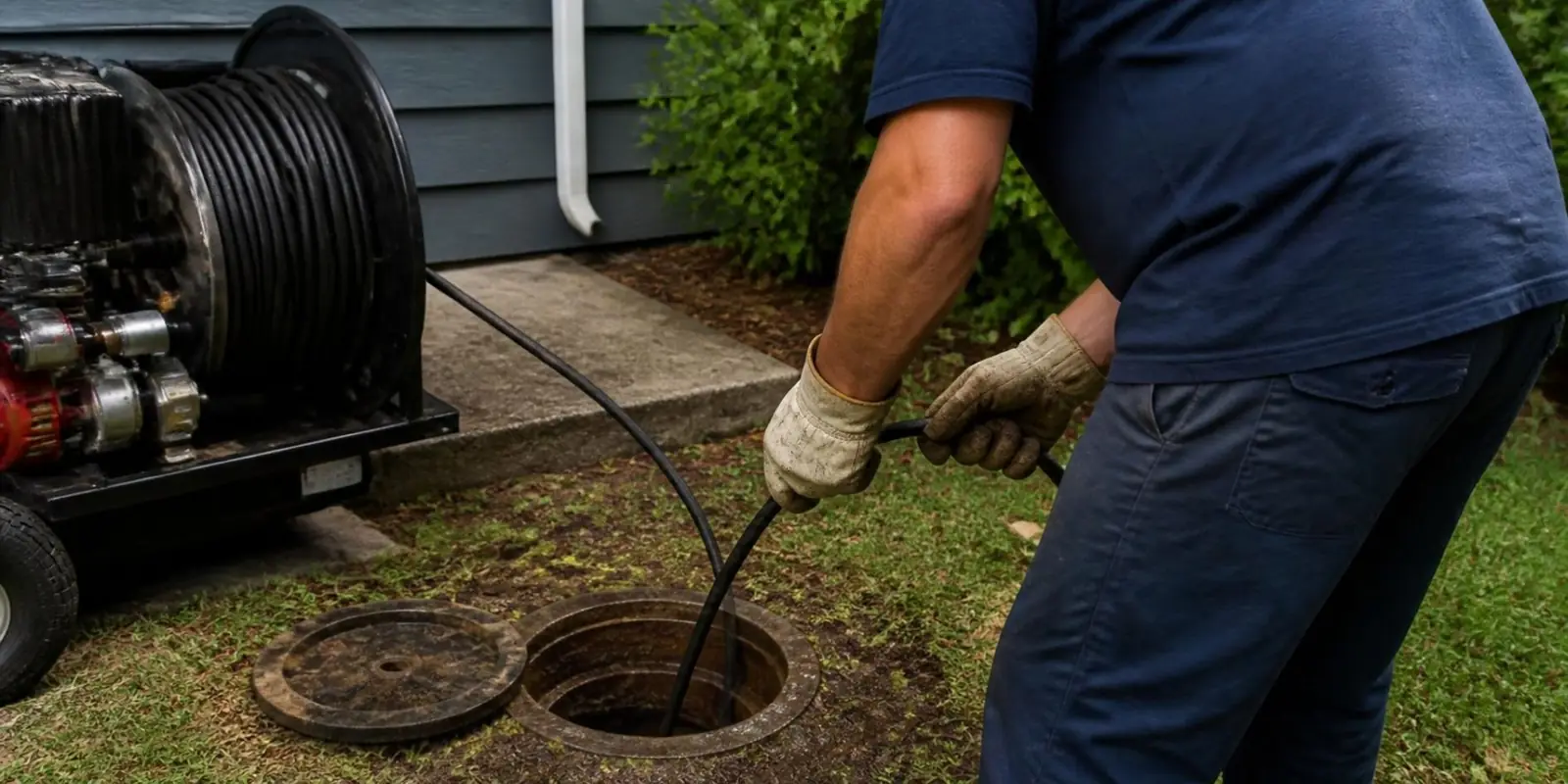
Call when more than one fixture is affected, when a cable or plunger fails or when sewage appears. The plumber will check cleanouts, test the drains and clear the line with the right tool. See our hydro jetting page for stubborn buildup.
Afterward, ask for a camera pass if the line has clogged before. It tells you whether you need maintenance or a repair.
Tools Homeowners Can Use Safely
A cup plunger for sinks and a flange plunger for toilets handle many local clogs. A small hand auger reaches a trap or a short branch. A hair removal tool for tubs and showers is cheap and effective. Wear gloves, avoid forcing a tool, and stop if the drain starts to leak at a joint.
Avoid power drills with makeshift cables and avoid chemical cleaners with mechanical tools. A tool pulled out of a drain with cleaner on it can splash. If a hand tool does not clear the clog in a few attempts, the clog is likely beyond its reach.
Signs a Drain Problem Is Really a Pipe Problem
A drain that clogs every few months in the same spot may have a damaged section of pipe, such as a belly, a sag or a broken joint that catches debris. A camera shows the pipe and tells you whether you have a maintenance problem or a repair problem.
Older homes in the area often have cast iron or clay lines that roughen with age and catch grease. Cleaning helps for a time, but a lining or replacement is the lasting fix when the pipe itself is the cause.
A Quick Diagnostic Walk-Through
- Run water in each fixture one at a time and note which ones are slow
- Flush a toilet and listen for gurgling at tubs and sinks
- Check any floor drain or cleanout for standing water
- Run the washing machine drain and watch the nearest fixtures
- Write down what you found and when it started
That ten-minute test answers the main question, whether the clog is local or deep. It also gives a plumber a clear starting point, which shortens the visit and keeps the price down. If you manage several units, repeat it in each one.
If you find standing water in a cleanout, stop all water use and call, since the main line is full. Photos of what you see help.
Panama City Beach Note
Sand is the local twist. Sand from outdoor showers, beach bags and swimsuits washes into drains and settles in traps and low spots. After a busy week at a rental, the shower trap can be half full of grit. Floor drains in garages near Laguna Beach and drains at older homes in Panama City collect the same debris. Cleaning the trap is a quick fix, and it often explains a slow drain without any deeper problem.
Clogged Drain Questions in Panama City Beach
Sand, hair and sunscreen residue build up in traps. A trap clean and a hair catch usually reduce the problem.
Yes. Fine sand settles in low spots and traps, then catches hair and soap.
That points to the main line, and a cable or jetting is the next step.
They rarely clear a real blockage and can harm some pipes. Mechanical clearing works better.