Why Two Fixtures Clog Together
Most fixtures connect to a branch drain that runs to a shared main line. When the blockage sits in a branch, only that fixture is affected. When the blockage sits in the main, every fixture upstream of it can slow or back up, and the lowest fixtures show it first.
A bathtub is often the lowest point on a floor, and a toilet is the next. When both back up, the blockage is probably past the point where their branches join. That is a main line problem, not a plunger problem.
What the Pattern Tells You
| What you see | What it suggests | First step |
|---|---|---|
| Only the toilet is clogged | A local blockage at the trap | Plunger or closet auger |
| Tub gurgles when toilet flushes | Shared branch or main line restriction | Stop use, call for cable |
| Tub fills when washer drains | Main line blockage | Stop all water, call |
| Multiple fixtures on different floors | Main line or sewer lateral | Call, check cleanout |
What to Do Right Now
- Stop using water everywhere in the house, including washers and dishwashers
- Do not flush again, even if the toilet seems to clear
- Check the cleanout outside, but do not open it if it is full of water
- Keep people and pets away from any area where sewage has backed up
- Call a plumber for cable or jetting
Avoid chemical drain openers. They rarely move a main line blockage, and the liquid becomes a hazard when the line is opened. A plumber with a cable machine is the safer path. For stopped lines after hours, see our emergency drain cleaning page.
Tub and toilet backing up: want it looked at?
Call (855) 575-2890 to talk through the problem and ask about timing.
Common Causes of a Main Line Blockage
- Tree roots entering a joint in the lateral
- Grease buildup and wipes that snag on a rough spot
- A belly or sag in the pipe where waste settles
- A broken or collapsed pipe section
- Paper, feminine products or other items that do not dissolve
Roots and bellies often cause repeat blockages. If the line has been cleared before and the problem returned, a camera pass finds the cause.
How the Line Is Cleared
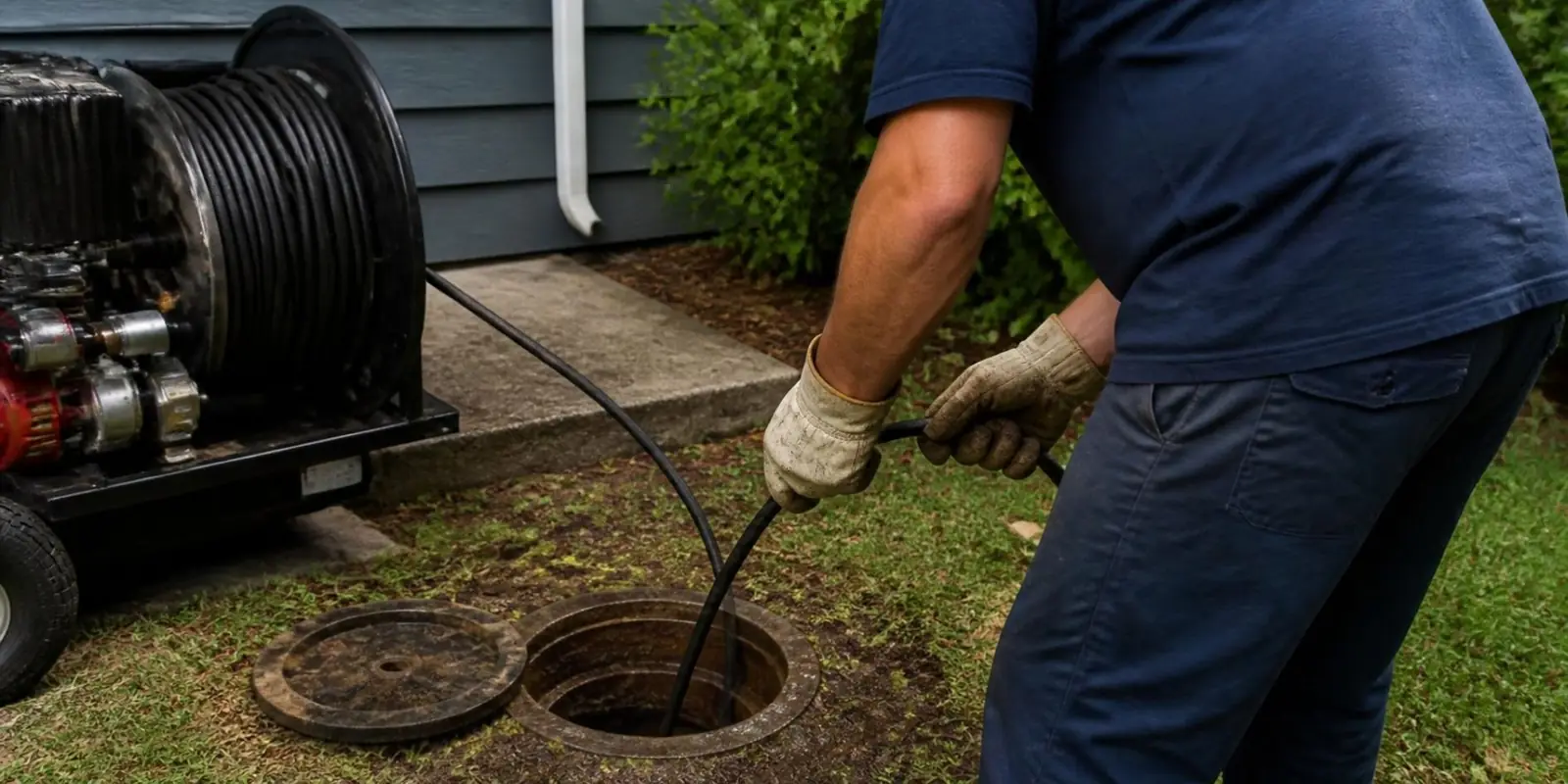
A plumber runs a cable machine through the cleanout or another access point, cuts through the blockage and flushes the line. For heavy grease or scale, hydro jetting cleans the pipe wall. After the line is open, a camera shows the pipe condition and the likely cause.
If the camera shows damage, repairs are covered on our sewer line repair page. If the line looks sound, you may only need periodic maintenance.
When It Might Be the Vent
A clogged plumbing vent, the pipe that rises through the roof, can cause slow drains and gurgling without a drain blockage. Birds nests, debris and leaves can block a vent. A plumber can check airflow at the vent while testing the drains.
Vent problems are less common than drain blockages, but they explain some cases where cable work seems to help only briefly.
Why the Problem Often Shows Up on a Busy Day
A partial main line blockage can hide for weeks. Water still flows, just slowly, and you may not notice. Then a full house, a load of laundry and a few showers push more water than the narrowed pipe can carry, and the lowest fixtures back up.
That is why a backup so often arrives on a holiday weekend or a checkout morning. The line had been struggling, and the load exposed it. A slow drain that comes and goes is worth checking before it fails.
What to Tell the Plumber When You Call
- Which fixtures are backing up, and which are fine
- Whether the washing machine or dishwasher has been running
- Whether you can find a cleanout, and whether it has water in it
- Whether this has happened before, and what was done
- The age of the home and whether trees are near the sewer path
These details help us send the right equipment. A line with a history of roots gets a root cutter, and a line with grease gets jetting.
Cleanouts: The Overlooked Fix
A cleanout is a capped pipe that gives a plumber direct access to the sewer line. Many older homes lack one, and others have one buried under landscaping. When you know where it is and keep it reachable, a main line clearing is faster and cleaner, since the cable can go straight into the pipe instead of through a toilet.
If your home has no cleanout, installing one is a modest project that pays off the next time the line backs up. We can add a two-way cleanout, which lets a cable run in both directions along the line. Keep the cap free of mulch and mark it so any guest or manager can find it.
Never leave a cleanout cap off. An open cleanout is a path for water, pests and sewer gas.
Panama City Beach Note
Rental bathrooms near the Gulf see heavy, mixed use, and sand and grit settle in drain traps and low spots. After a full week of guests, a main line that was borderline can fail on checkout day. Palm and oak roots near older lines in Panama City and Lynn Haven add to the risk. If your tub and toilet back up together, call rather than wait for the next guest to find out.
Tub and Toilet Clog Questions in Panama City Beach
Likely, yes. Heavy use can push a borderline main line past its limit, and the lowest fixtures show it first.
A plunger helps a local clog. If both are affected, the blockage is further down and a plunger will not reach it.
It is typically a capped pipe near the foundation or in the yard.
You do not need to, but stop using hot and cold water until the line is cleared.